
No Official Clinton Weekly Blotter
Start with the Sheriff Inmate Search. It is an official roster, date-descending, built for search and sorting rather than weekly summaries. Nothing promises seven days of history or a 72-hour window. No archive depth is stated. The sheriff publishes no schedule explaining how weekends, holidays, releases, or corrections reshape the visible list.
So the method has to adjust. Work backward from your chosen date range and keep every label intact. Never call the roster complete for a week. Someone released from custody can vanish from public view. The booking record stays on file at the agency, and an older listing still showing proves nothing about who is in custody now. A sound weekly reconstruction notes which agency supplied each fact and when each source was checked.
Read Clinton Arrest Records by Date
Any multi-day review needs firm start and end dates. That separates it from a simple check of who was arrested today. Use the official roster first, then close real gaps through the records custodian rather than an unofficial index.
- Set the exact period, including year, and record the time the search begins.
- Open the sheriff roster and allow the browser application to render.
- Read newest results backward. Preserve the displayed date label without renaming it “arrest date.”
- Note the person’s name, listed agency, charge, bond or hold, and photo state only when shown.
- For missing days or fields, ask Civil and Criminal Records for the arrest log or jail record for that bounded period.
- Check the court docket later for filing and disposition, not as a substitute for booking data.
For a same-day question, the Daily Arrest Report fits better. The weekly approach exists to rebuild several days and track what survives once the public list shifts. When the roster does not reach far enough back, the official public-records request page is the county's route for a dated request.
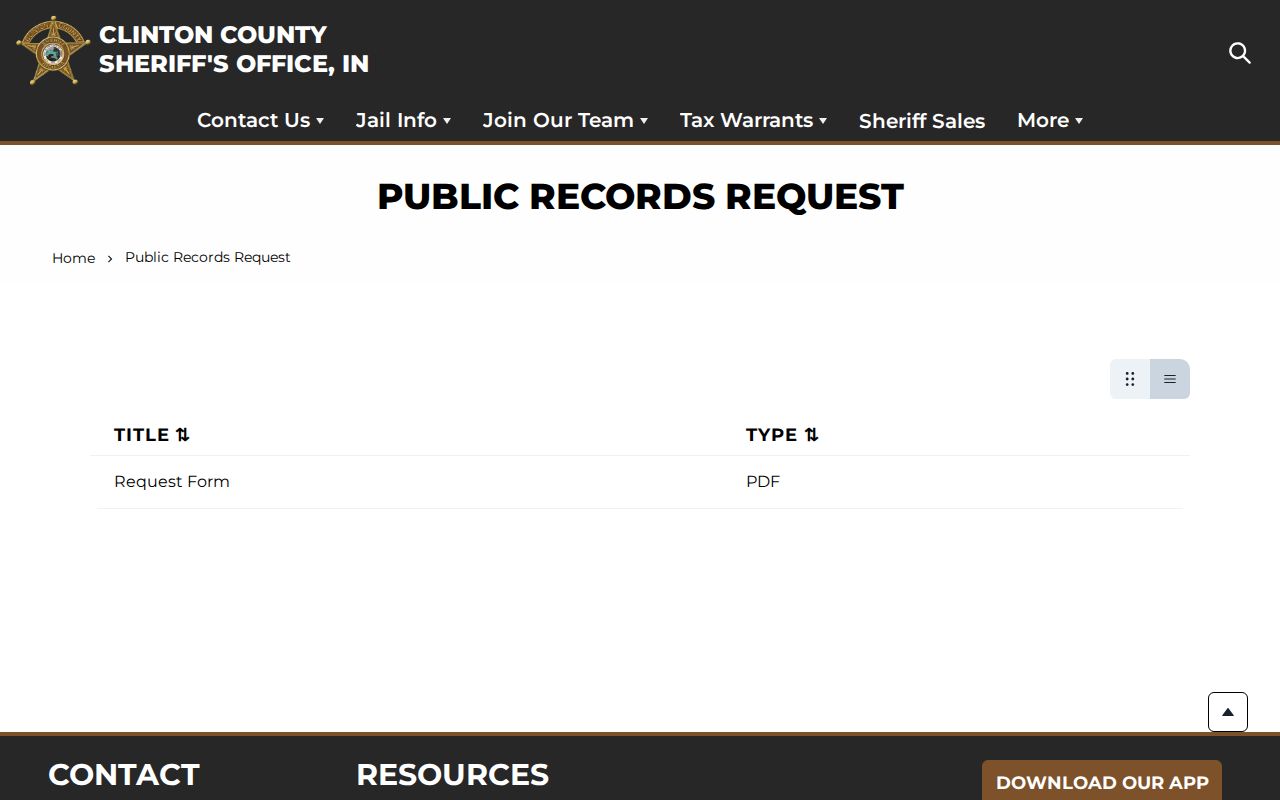
Use the request page whenever the live roster stops short of your date range.
Weekly Arrest Log Entry Fields
Indiana guidance treats arrest and jail-log information more broadly than the roster's on-screen fields. Ask the custodian for a missing field instead of assuming it was never recorded.
| Record element | Safe interpretation |
|---|---|
| Identity | The person named in the booking record; confirm similar names. |
| Date and time | Use the exact event label: arrest, received, discharged, or transferred. |
| Agency or officer | Identifies who handled the arrest; it may not be the sheriff. |
| Location | The reported arrest location when supplied, not necessarily the jail. |
| Listed charge | An charge at that stage, subject to later change. |
| Bond or hold reason | A temporary custody condition, not a case result. |
| Image | Only a booking photo when the official source identifies it as such. |
Four records are easily confused. The arrest log and the booking record each stand alone. So do the incident report and the court case. A weekly table should label its sources rather than blur them into one narrative. The booking record documents intake at the jail. An incident report describes what officers investigated. A court docket shows whether a prosecutor filed charges and what followed. Current custody is a separate question. The jail or VINE answers it best.
Local News Is Selective
Local news adds color but skips most arrests. Clinton County Daily News runs selected local stories, and its coverage often explains an investigation or a later court date. Radio Mom has carried sheriff arrest reports. WRTV keeps a county news archive. Every outlet edits by choice and timing, so a story may run days after the arrest itself. Treat the Daily News as one thread of context after the official records, not as the county's blotter.
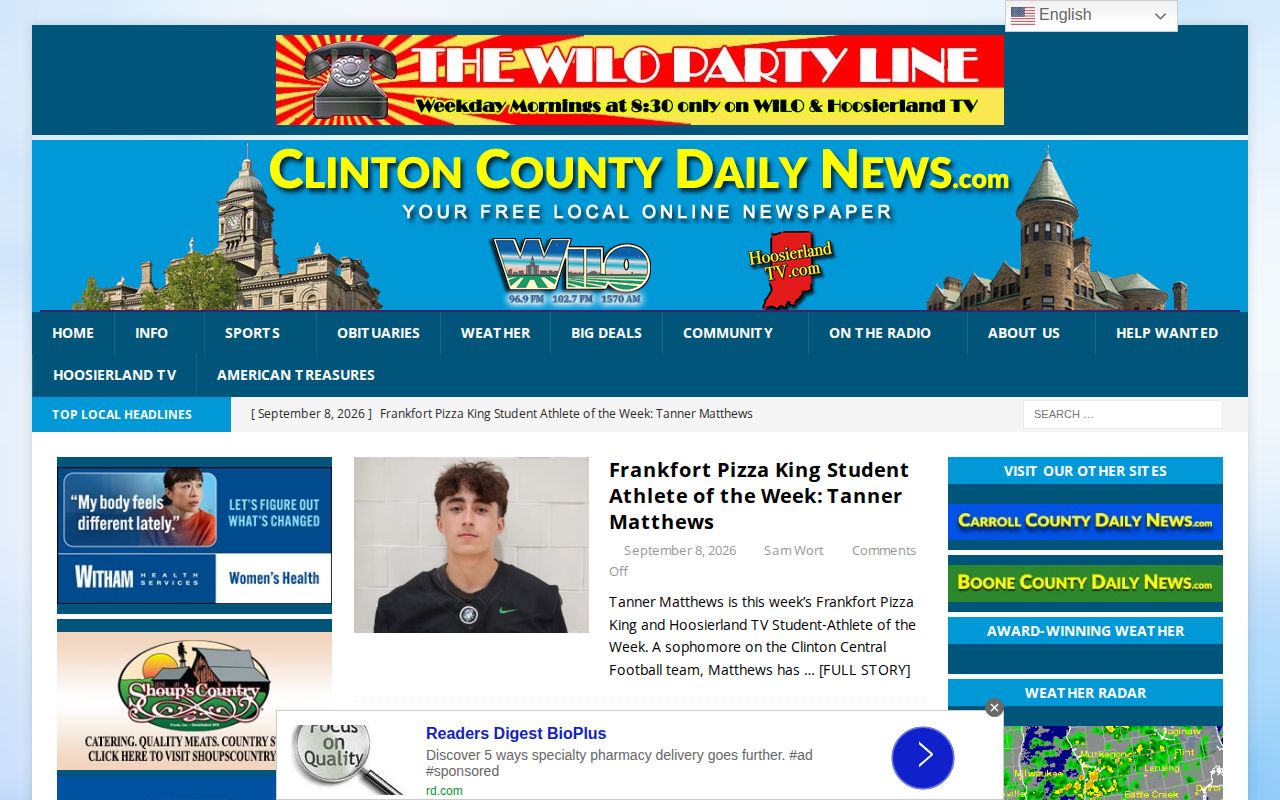
Date and attribute each story. Never treat news as the full weekly roster. Clinton County Today's Frankfort Police category leans city-focused, and its postings surface selected agency reports and follow-ups rather than county-wide arrests.

A news photo is usually a scene or staff image. It is not a mugshot. The publisher or an official source has to say so. The WRTV Clinton County archive adds regional reporting on selected incidents. That context helps. Still, one outlet's silence never proves an arrest did not happen in Clinton County.
Weekend Arrest Timing Gaps
No official source documents a Clinton County weekend surge or a holiday posting cycle. Claiming one would be guessing. The real problem is timing. Booking and roster display can carry one date. A release from the agency and a news story can each carry another. A Friday-through-Monday search should span the full bounded range. It should also avoid sorting people by when an article ran. Central Dispatch never closes. But dispatch answering calls is not the same as booking data going public. Dispatch routes calls to the sheriff, city police, town marshals, fire, and medical agencies. For custody answers and arrest documents, the jail and Civil and Criminal Records remain the right channels. That division is worth remembering when a holiday limits staff access.
Clinton Arrest Archives and Retention
Retention is where most Clinton County archive questions begin. The sheriff portal lists no retention period of its own. State rules fill that gap. Indiana Archives and Records Administration sets general schedules, and each county office layers its own on top. So a booking record can sit in agency custody long after it disappears from a public webpage. The reverse happens too. An unofficial arrest record copy can linger online. It can stay there even after the official page changes or comes down. Visibility alone tells you nothing about custody. Hunting an older record means asking the right series of questions. Which office holds the booking card, the jail log, the release or transfer entry, the photo? Bring a name, a date range, the agency you know, and any booking identifier you have. Then ask whether the series stayed with the sheriff. It may have been destroyed under an approved schedule. Or it may have moved elsewhere. The county Archives can be reached at 765-659-6369, though booking material should start with the sheriff custodian. Court papers go through the clerk or MyCase. The IARA county and local schedules page lays out the framework that governs these answers. That framework still cannot tell you whether one specific Clinton County booking photo was archived or destroyed. Sometimes an old arrest result shows up only in news coverage or on an unofficial site. Trace it back to the originating agency. Request the official record from that custodian, along with any correction, sealing, or expungement status. Know the limits here. A court order does not sweep through private copies on its own. And a third-party timestamp says nothing about when the county actually created or changed its own record. Keep any historical review tight. Use the smallest date range that answers your question. A handful of news stories is not a trend. Aggregate crime data may sketch broad reported activity. But it is not a roster of individuals. It cannot stand in for a missing weekly arrest log. Agency news releases cover selected events, not every booking. Clinton County also splits jail records from court records. A booking card, arrest log, release entry, transfer entry, or booking photo has one home. The sheriff or jail is the custodian. The clerk and Indiana MyCase handle the later public court layer. A docket can show a filing, yet it will not recreate every fact held in the jail record. Request each document from the office that created or maintains it. Cite the two records separately when their dates or labels differ.